
The Reserve Bank of India (RBI) has identified "climate shocks" as a risk to food inflation rates and overall price rise while stating that the outlook for the country's economic growth remains bright. In its Annual Report for 2023-24, released on Thursday, the central bank said easing supply-chain pressures, broad-based softening in core inflation, and early indications of an above-normal southwest monsoon meant well for the inflation outlook in 2024-25. "The increasing incidence of climate shocks, however, imparts considerable uncertainty to the food inflation and overall inflation outlook," said the RBI while noting headline inflation moderated by 1.3 percentage points on an annual average basis to 5.4 per cent in 2023-24.

A combination of factors, including heavy investments in US Treasury bonds and dollar sales at a healthy profit, facilitated the Indian central bank in transferring a record surplus of Rs 2.11 trillion to the government for 2023-24 (FY24). The RBI's dollar purchases increased in FY24, supported by robust capital inflows endorsing the economy's health.

The Reserve Bank of India's (RBI's) record surplus transfer to the government has raised hopes among bond traders that the government might reduce its gross borrowing for the current financial year (2024-25/FY25) by up to Rs 1 trillion. The RBI approved a dividend of Rs 2.11 trillion for the central government for 2023-24, marking an increase of roughly 141 per cent from 2022-23 (FY23). In addition, the contingency risk buffer has been raised to 6.5 per cent from the previous 6 per cent.

The Reserve Bank of India's (RBI's) state of the economy report observed that any durable alignment of headline retail inflation with the target of 4 per cent could recommence in the second half of FY25 and sustain until numbers closer to the target are seen during the course of FY26, dashing hopes of any reduction in the policy repo rate in the current financial year. The report, authored by RBI staffers, including Deputy Governor in charge of monetary policy Michael Patra, said though headline numbers may fall in July and August due to base effect, it is likely to reverse in September.

Debt mutual fund (MF) schemes, which witnessed relatively muted inflows in the past three years, saw a surge in investor interest in April amid election-induced volatility in the equity markets. Active debt funds garnered nearly Rs 66,000 crore net inflows in April, most at least since December 2020.

The Reserve Bank of India (RBI) will meet top executives of asset reconstruction companies (ARCs) on Friday to take stock of the sector. During the meeting, ARCs will also seek clarity from the regulator on bank borrowing. While there is no regulatory ban in place, ARC sources said banks often refuse funding.

'As these segments are growing at 25 per cent for the last three years, credit quality has been extremely good.'

The BJP has again fielded Prataprao Patil Chikhalikar who humbled Ashok Chavan in the 2019 Lok Sabha polls by over 40,000 votes.

The Reserve Bank of India (RBI) abstained from selling any US dollars throughout February, for the first time in nine months. The decision comes amid increasing pressure on the rupee, as expectations of rate cuts by the US Federal Reserve keep pushing back. The last time the RBI did not sell dollar over a month was in May 2023.
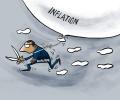
Most members of the Reserve Bank of India's monetary policy committee (MPC) decided to stick to the course on bringing retail inflation to the target of 4 per cent while voting for maintaining status quo in the April review, except external member Jayanth Varma who voted for a 25 bps cut in the repo rate. "I believe that the extant monetary policy setting is well positioned," RBI governor Shaktikanta Das said in the minutes of the policy review, which came out on Friday. "Monetary policy transmission is continuing and inflation expectations of households are also getting further anchored.

Bandhan Bank's managing director (MD) and chief executive officer (CEO) Chandra Shekhar Ghosh (pictured), who has decided to step down, on Wednesday said the bank will need at least three months to identify his successor. He has also written to his employees, asking them "not to worry" over his surprise decision. "Whatever, our experience in the earlier selections, when we selected two executive directors on the basis of that experience we need a minimum three months of time for selection of candidates and then it will go to RBI and then whatever is the time taken by RBI for approval," Ghosh said.

Banks are preferring instruments with higher premium over government securities for their held-till-maturity (HTM) portfolio, following the new investment norms, which came into effect from April 1. They are stocking up on corporate bonds and state government securities to boost yield on their portfolio, according to market participants. "Definitely, if there is a good spread available and without lower credit risk, those instruments will be favoured to boost the yield on the portfolio.
Exchange-traded currency derivatives volumes are likely to drop in view of new Reserve Bank of India (RBI) rules, casting a cloud over further participation of retail investors and proprietary traders. There are concerns that existing positions without any underlying exposure will need to be liquidated. Also, weighed down by dollar demand from local oil companies and weakness in its Asian peers, the rupee on Wednesday (April 3) ended at a new closing low of 83.44 versus the US currency.

Sir Osborne Smith was the first governor of the Reserve Bank, serving from April 1, 1935, to June 30, 1937.

A potential risk to the rupee's appreciation trajectory lies in the event of a delay in the Federal Reserve's rate cut cycle, particularly if core inflation in the US remains elevated.

More than half a dozen private-sector banks are awaiting regulatory approval for the appointment of a second whole-time director on their boards.
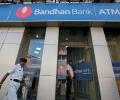
It is 10 years since Bandhan Financial Services became the first microfinance institution (MFI) to receive the universal bank licence. A year later, in 2015, it started operations. Bandhan's entry into banking was seen as a vote of confidence by the Reserve Bank of India (RBI) for the country's microfinance sector. Subsequently, the RBI awarded small finance bank licences to nine MFIs.

HDFC Bank has been conscious in not accepting high-cost deposits, which have resulted in slower growth in October-December, said Sashidhar Jagdishan, managing director and chief executive officer, during an interaction with Goldman Sachs recently. He said during times of tight liquidity, short terms hardened, as was the case in October-December. "Not only did we participate, but we also gave up which came up for maturity," he said.

Standard Chartered's India strategy will focus on wealth management while credit card will remain core to its business though will avoid competition with the country's private banks, said a senior executive of the British lender. "Our focus on wealth management and affluent clients are central to our existence. "We are strong in these areas and we want to grow in these areas.
Short-term government bonds fell behind longer-dated securities in demand this month so far due to a liquidity crunch in the banking system and expectations of a delay in a rate cut, said market participants. Investors have favoured longer-tenure government bonds, or g-secs, with insurance companies and pension funds leading the charge by stocking up on those with maturities of 30 years and more. Preference for longer-term securities was strengthened by the conclusion of the borrowing programme, which compelled institutional investors to fulfil their requirements in the secondary market.
 © 2026 Rediff.com - Investor Information - Advertise with us - Disclaimer - Privacy Policy - Sitemap - Feedback - About us - Terms of use - Grievances